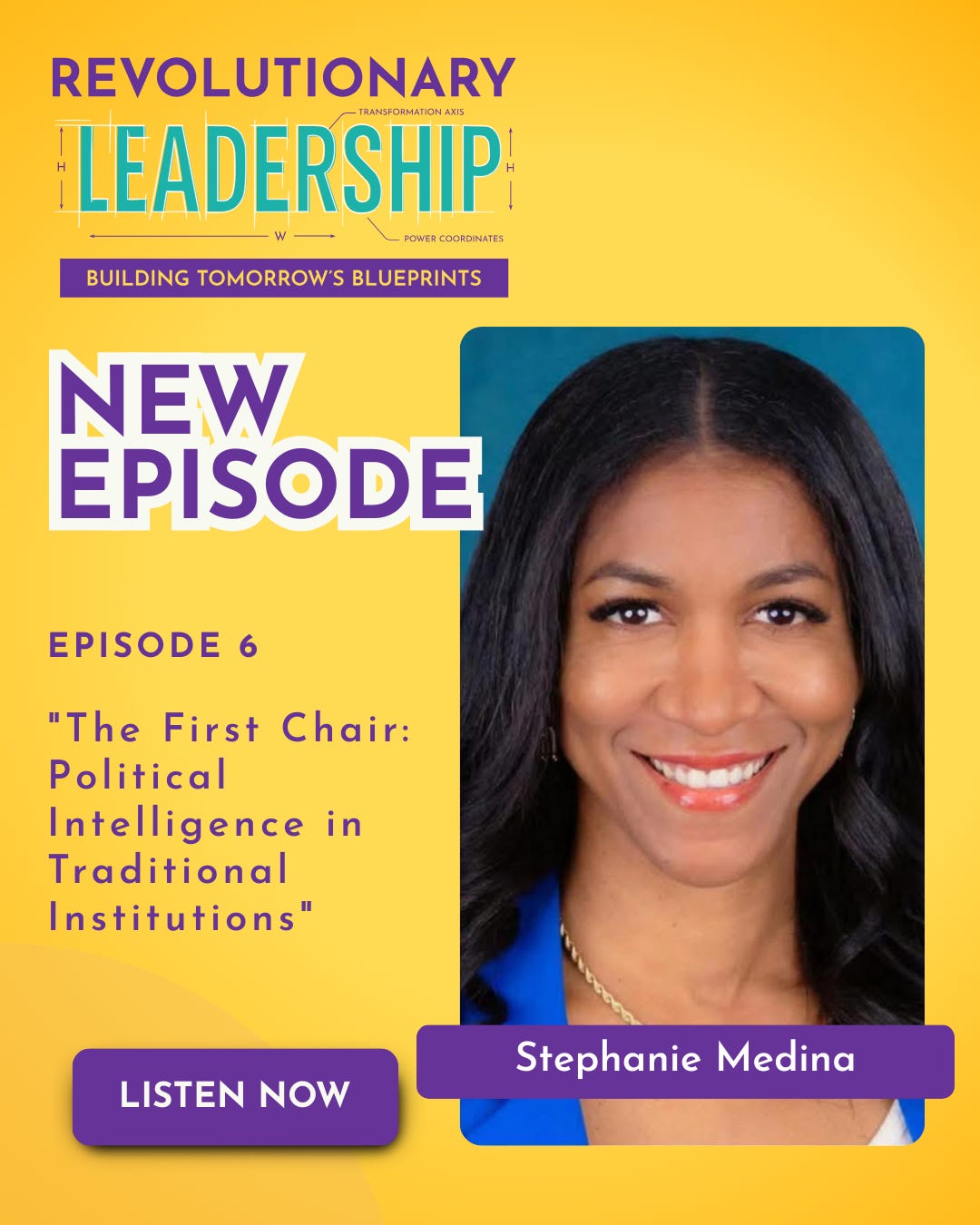
Stephanie Medina has led inside one of the most complex and traditional institutional environments in the country: the judiciary. As a leader in court administration, she has navigated the particular pressure that comes with being a Black woman in a ‘first chair’ position — visible enough to be scrutinized, isolated enough that the usual maps don’t apply.
Key Takeaways
-
Political intelligence is not the same as playing politics. Stephanie draws a sharp line between the manipulation most people associate with office politics and the strategic situational awareness that effective leaders must have. One is transactional and corrosive. The other is essential.
-
The First Chair carries a specific set of risks: narrower margin for error, higher scrutiny, no predecessors to call, and the symbolic weight of what your presence means to everyone watching.
-
Read the room — all of it. Track what is said, what is not said, who speaks to whom before meetings, who controls informal information, and what the institutional culture actually rewards versus what it says it rewards.
-
Your leadership in a traditional institution is both about you and bigger than you. Staying in rooms that are difficult, when it matters, is itself a form of strategic leadership.
BLUEPRINT 06
Learning how power works is not compromise. It is preparation. You lead for the next person, not just for yourself.
Power Activation Prompt
What would it look like to bring more political intelligence to your current institutional context — not to play politics, but to lead more effectively?
Revolutionary Leadership: A Power Playbook for Black Women publishes August 4, 2026. Pre-order at revolutionarylead.com.
Listen to the podcast on Apple Podcasts, Spotify, Amazon Music, Castbox, or YouTube.
Join The Blueprint Circle — founding membership $120 for life, capped at 100 members. After that, it closes permanently. revolutionarylead.com
Listen to the podcast
Apple Podcasts • Spotify • Amazon Music • Castbox • YouTube
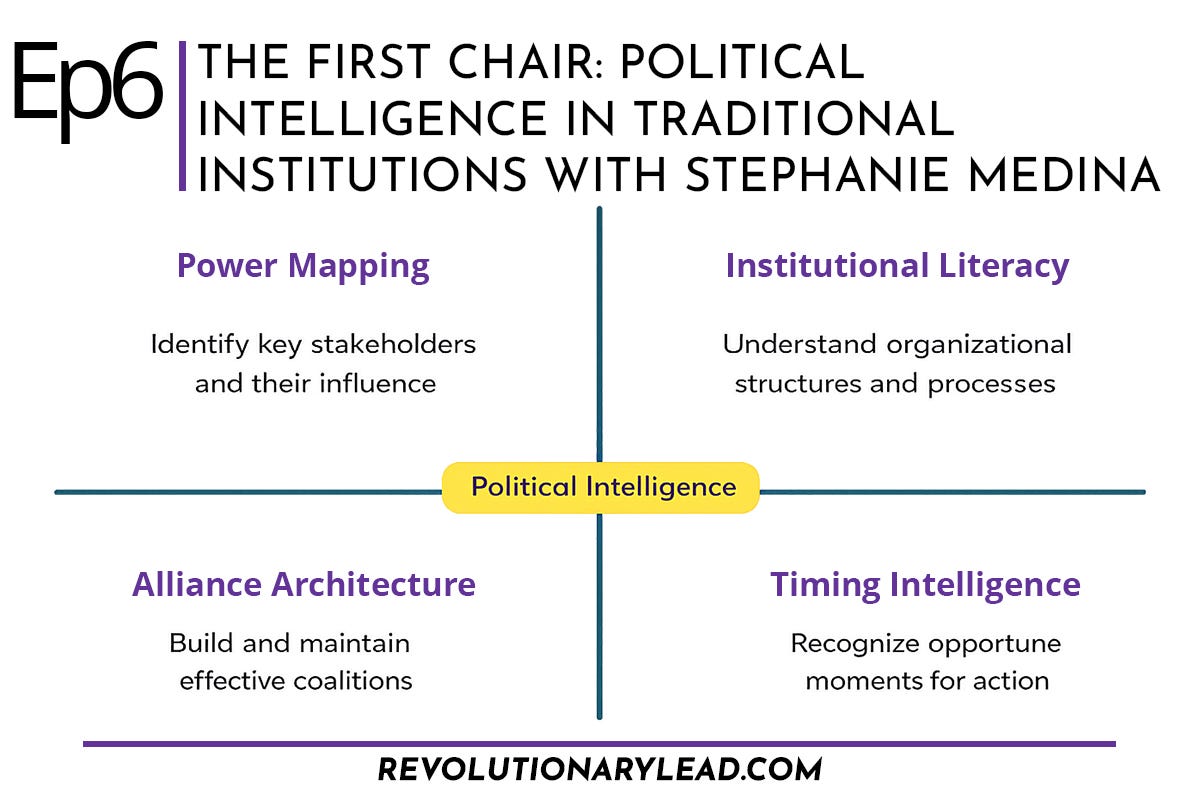
Stephanie names something most leadership training misses entirely: there is a distinction between playing politics and being politically intelligent. One is transactional and corrosive. The other is essential — and most Black women in traditional institutions have to develop it without anyone teaching them how.
My research has been quantifying what political intelligence actually does. The data shows it is not a soft skill. It is a measurable predictor of advancement, and it does its work through one specific mechanism.
For Blueprint Circle members, the mechanism and how to build it.